




INSTALLERS & CONTRACTORS![]()
The Future-Proof Field
Reduced stitching complexity,Cleaner installation workflows,Greater flexibility after handover
PROCESS INEFFICIENCY![]()
The Games Change. So Should Your Markings
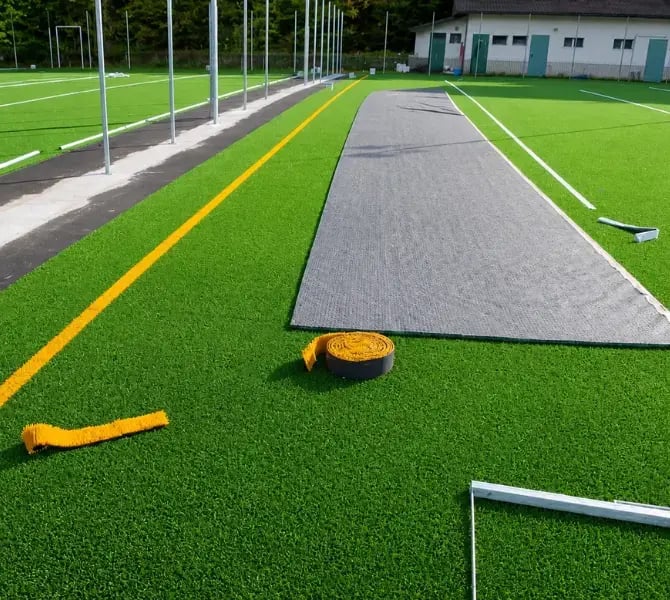
Sewn-in line packages add complexity long before the field is handed over.
More stitching adds complexity, requiring greater coordination and precision while increasing the risk of delays, rework, and warranty issues.
The bottom line? Sewn-in markings create operational friction throughout production and installation.
INSTALLATION RISK![]()
Installation Complexity Has a Cost
Permanent markings can introduce:
- Longer installation timelines
- Additional seam work
- Greater dependency on specialized labor
- More complicated layout coordination
- Increased potential for surface weakness
The more permanent markings built into the turf, the more complicated the installation process becomes.
BETTER FLEXIBILITY, NO BUILD![]()
Facilities increasingly want multi-sport capability and event flexibility. Traditionally, that meant more sewn-in markings and more installation complexity. The Future-Proof Field changes that equation.
FUTURE-READY INSTALLATION![]()
A Simpler Installation Model
Minimal-line turf, combined with robotic marking capability, simplifies the process.
Potential advantages include:
- Reduced stitching complexity
- Fewer seam-related concerns
- Cleaner installation workflows
- Easier secondary sport integration
- Greater flexibility after handover
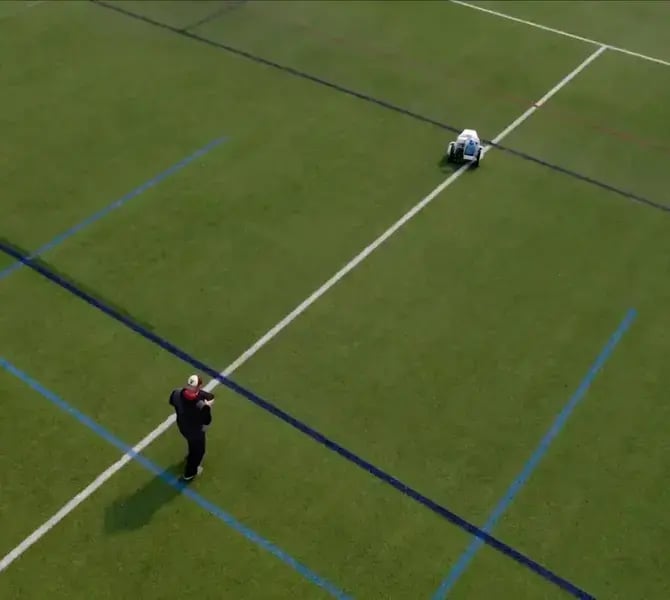
Instead of building every future layout into the field on day one, flexibility becomes part of the long-term operating model.
EXPLORE INSTALLATION WORKFLOWS![]()